
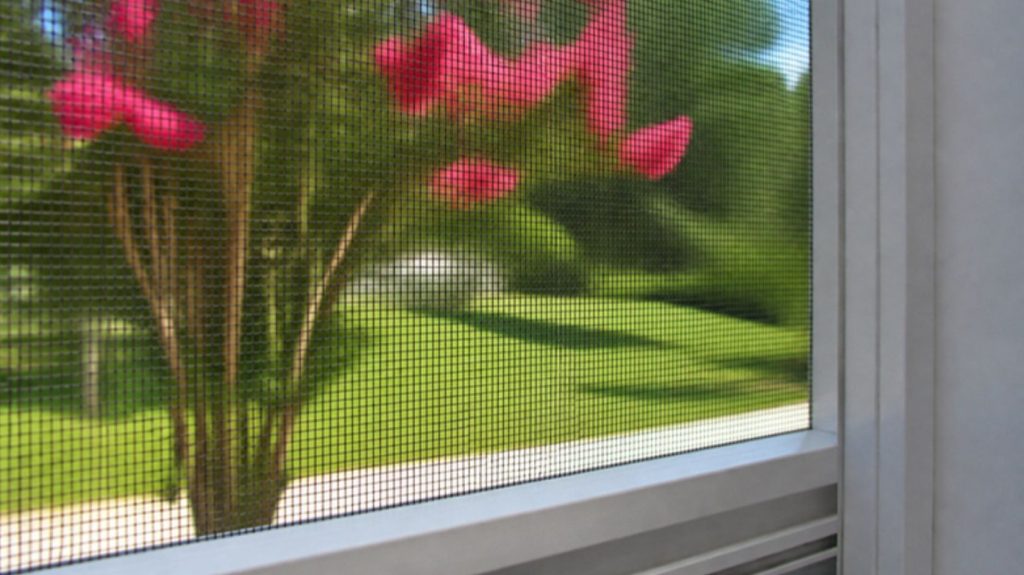
Window screen replacement comes in two flavors. If the frame is straight and sound, you can rescreen it with new mesh. If the frame is bent, corroded or missing, you replace the whole screen with a new one built to fit the window.
In Louisiana’s humidity, the mesh you pick matters. Phifer, a screen manufacturer, lists all of its fiberglass screens among its best choices for coastal and high-humidity climates, along with its sun control and heavy-duty lines.
At TurnKey Window we repair and replace screens for homes across the New Orleans area, including custom sizes for older windows. To get torn or missing screens sorted, contact us or call (504) 226-6201.
Key takeaways
- HomeGuide’s 2026 window repair guide puts screen repair at $10 to $120 and full screen replacement at $100 to $350 per window.
- Phifer names its fiberglass screens, sun control screens, TuffScreen and PetScreen as best for coastal or high-humidity climates.
- Rescreening replaces only the mesh, while a new framed screen makes sense when the frame is warped, dented or damaged.
- HomeGuide’s screen cost guide says screens last around 10 to 15 years depending on climate and material.
- In New Orleans historic districts, the HDLC requires simple, removable screens that reveal as much of the window as possible.
- Screens keep insects out but aren’t designed to keep children or pets in, so never rely on them for fall protection.
Rescreening or a new screen
The first decision is whether you need new mesh or a whole new screen. HomeGuide’s window screen replacement cost guide explains that you can replace just the mesh, called rescreening, when the frame is in good condition. When the frame is worn, faded, dented or warped, replacing the frame and mesh together is the better option.
| Situation | Best fix |
|---|---|
| Small hole or tear, frame fine | Patch or repair kit |
| Large tear, sagging or brittle mesh, frame fine | Rescreen with new mesh and spline |
| Bent, dented or corroded frame | New framed screen |
| Screen missing entirely | New screen, measured to the window |
| Odd-shaped or older window | Custom screen built to fit |
Our window screen repair and replacement page covers both options, including rescreening a sound frame and building new screens when the frame or mesh is too far gone.
What window screen replacement costs
HomeGuide’s 2026 window repair cost guide puts window screen repair at $10 to $120. It says large holes or severe damage usually call for a screen replacement, which runs $100 to $350 per window including labor and materials.
HomeGuide’s dedicated screen cost guide, from 2023, breaks that down further by material. These are installed costs per window.
| Screen material | Installed cost per window (HomeGuide, 2023) |
|---|---|
| Fiberglass | $50 to $250 |
| Stainless steel | $60 to $450 |
| Aluminum | $65 to $350 |
| Copper | $105 to $900 |
| Brass | $115 to $950 |
The same guide lists custom screens for non-standard shapes and sizes at $150 to $500 per window installed, and pet-proof screens at $100 to $500. Window size, material, access and local labor rates all move the price.
What drives the price
- Window size and shape. Larger and non-standard windows need more material and custom frames.
- Mesh type. Fiberglass is at the low end, while metals like copper and brass cost more.
- Access. HomeGuide notes that high windows needing scaffolding, or windows blocked by kitchen or bath fixtures, take longer.
- How many screens. HomeGuide says a skilled handyman can replace multiple screens in an hour, so doing several at once is efficient.

Choosing screen mesh for Louisiana humidity
Phifer’s screening FAQ is useful here. Asked which products are best for a coastal or high-humidity climate, it answers: all fiberglass screens, sun control screens, TuffScreen and PetScreen.
Standard fiberglass
Fiberglass is the common, affordable choice. HomeGuide notes that fiberglass and aluminum are the two most commonly used screen materials, both lightweight and rust-free.
If you want fiberglass with more strength, Phifer says its 18 by 14 .013 fiberglass is 50 percent stronger than standard fiberglass insect screen.
Aluminum
Aluminum’s advantage is shape. HomeGuide says fiberglass screens tend to stretch over time and need replacing more often than aluminum screens. Phifer’s FAQ says both aluminum and fiberglass are very common and that the right one depends on how you rank price, durability and visibility.
Pet and heavy-duty screens
If a dog or cat goes after your screens, Phifer calls PetScreen and TuffScreen its most durable screens. HomeGuide describes pet-proof screens as PVC-coated polyester mesh built to withstand claws.
Small-insect screens
Phifer says its 20 by 20 fiberglass “No-See-Ums” screen provides the maximum insect protection of its products. Consider it for windows you keep open in the evenings.
Better view and airflow
Phifer also makes screens designed for visibility and ventilation. It says UltraVue 2 improves airflow by 25 percent and BetterVue gives 10 percent more insect protection compared with standard fiberglass or aluminum screen.
Porch screens, screen doors and storm screens
Window screens are often only part of the job in a Louisiana house. HomeGuide’s screen guide lists a few related costs that are useful for planning.
- Screen doors. Replacing a screen door costs $170 to $350 including installation.
- Porches. Rescreening a porch costs $600 to $3,500, depending on size.
- Hurricane screens. HomeGuide lists fabric hurricane screens at $35 to $210 per window and steel mesh versions at $595 to $1,050.
Hurricane screens are a different product from insect screens. They’re built to protect against impacts, so if storm protection is your goal, compare them with our impact-resistant windows before deciding.
HomeGuide also notes that patio and door screens take more wear than window screens because of frequent use and larger size. If a door screen keeps tearing, a heavier mesh like the pet-resistant lines above is worth pricing.
How to tell it’s time to replace your screens
HomeGuide says window screens last around 10 to 15 years depending on climate and material, and that regular cleaning can add 5 years or more. These are the signs it lists for replacement:
- Holes or tears in the mesh that let in bugs
- Faded or discolored screens that cut visibility
- A bent or damaged frame that makes the window hard to open and close
- Loose or damaged spline that lets the mesh sag
- Aged, brittle screens that no longer look good
How to measure and rescreen, if you do it yourself
Rescreening a ground-floor screen is a reasonable DIY project. HomeGuide says DIY repair kits run $10 to $20 and include mesh, a rolling tool, a spline removal hook and replacement spline.
- Remove the screen from the window. Only do this from inside or from the ground. Don’t lean out of upper-story windows.
- Check the mesh size. Phifer’s FAQ suggests taping a 1 by 1 inch paper square to the screen and counting the openings across and down. Eighteen across and 16 down means an 18 by 16 mesh.
- Size the spline. If you don’t have a sample of the old spline, Phifer says to measure across the frame’s spline channel and use one size smaller spline.
- Pull the old spline and mesh. Use the hook to lift the spline out of its groove.
- Lay and roll in the new mesh. Keep it smooth and square as you roll the spline into the channel.
- Trim and reinstall. Cut off excess mesh and fit the screen back in the window.
For second-story windows, bent frames or custom shapes, bring in a pro. Ladder work isn’t worth the risk for a screen.
Cleaning to make screens last
Phifer says to rinse metal screens with water only and to clean vinyl-coated products with a mild soapy solution, avoiding hard scrubbing. A gentle clean once or twice a year helps screens reach the long end of their lifespan.
Screens on historic New Orleans homes
If your house is in a local historic district, screen choices are reviewed too. The HDLC’s Guidelines for Windows and Doors say screens should conceal as little of the historic window as possible.
- The HDLC requires simple screen windows with large screened openings that reveal as much of the window as possible.
- It requires removable window screens, so the historic window can be maintained.
- It does not permit vinyl, aluminum or other synthetic screen frames unless they’re part of an approved window, particularly on street elevations. It notes that wood frames can be custom made for any size or shape.
- It does not permit half screens or screens too small for the opening that need in-fill panels.
- It recommends painting wood screen frames to match the window trim.
Our custom windows page explains how we handle older, non-standard openings.
A safety note on screens
Screens are built to stop insects, not people or pets. SoftLite’s warranty summary states plainly that screens, locking or not, aren’t intended to keep persons or animals in or out.
Keep furniture that kids can climb away from open windows, and don’t count on a screen to hold a child or a pet leaning on it.
If you have young children, it’s worth opening upper-floor windows from the top sash where your windows allow it. That way the open gap sits well above the floor and the screen isn’t the only thing between a child and the opening.
Frequently asked questions
How much does window screen replacement cost?
HomeGuide’s 2026 window repair guide puts a full window screen replacement at $100 to $350 per window including labor and materials. Simple repairs to small holes cost $10 to $120.
What is the best window screen for high humidity?
Phifer lists all of its fiberglass screens, sun control screens, TuffScreen and PetScreen as best for coastal or high-humidity climates. Fiberglass is also one of the most affordable options.
Can you replace just the screen mesh?
Yes. HomeGuide says you can rescreen by replacing only the mesh when the frame is in good condition, and replace the frame and mesh together when the frame is worn, dented or warped.
How long do window screens last?
HomeGuide says window screens last around 10 to 15 years depending on climate and material. Regular cleaning can extend that by 5 years or more.
Are window screens a standard size?
Screens come in standard and custom sizes, and HomeGuide notes that custom screens cost more. Older and odd-shaped windows often need screens built to fit.
Get your screens fixed before bug season
Whether it’s one torn screen or a whole house of missing ones, we can measure, recommend a mesh for our humidity and give you a free estimate.
Visit our window screen repair and replacement page, see our window repair services, or contact us. You can also call (504) 226-6201.
Related reading
- Top 10 tips for choosing energy-efficient home windows
- The top 5 signs it’s time to replace your windows