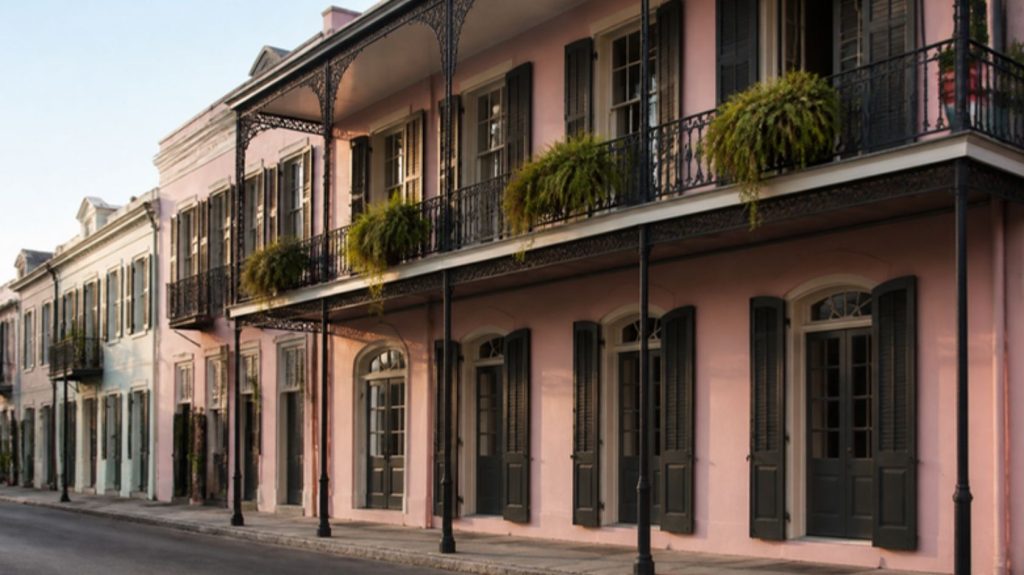
Replacing windows in a historic New Orleans home starts with one question: is the house inside a local historic district or a landmark. If it is, the Historic District Landmarks Commission, or the Vieux Carré Commission in the French Quarter, reviews visible exterior window changes before any work begins. The HDLC strongly encourages repair over replacement, and it doesn’t permit replacing historic wood windows with vinyl or aluminum at street elevations.
That doesn’t mean you’re stuck with drafty, stuck sashes. It means the path runs through documentation, careful matching and, often, repair of what’s already there. Outside regulated districts, you have more freedom, but the same matching principles still keep an old house looking right.
This guide explains what to expect, step by step. For help with your own windows, TurnKey Window works with homeowners across the New Orleans area, and you can reach us through the contact page or at (504) 226-6201.
Key takeaways
- In a local historic district or at a landmark, you need a Certificate of Appropriateness and permits before exterior window work.
- The HDLC says staff-level approvals for simple projects take approximately 3 to 5 days.
- To replace historic windows, the HDLC requires documentation showing the existing windows are beyond repair.
- Replacements must match the original size, shape, configuration, materials, muntin pattern and detailing as closely as possible.
- The HDLC doesn’t permit vinyl or aluminum replacements for historic wood windows on street elevations.
- In homes built before 1978, paid work that disturbs paint must follow EPA lead-safe rules.
Step one: find out which rules apply to your house
New Orleans has two bodies that review exterior changes to historic buildings. Which one applies depends on where your house sits.
- Vieux Carré Commission. Its jurisdiction covers private and semi-private properties within the Vieux Carré Historic District. The city says an application must be filed through the One Stop Shop and VCC approval obtained before any exterior work begins.
- Historic District Landmarks Commission. The HDLC reviews all alterations to and replacement of visible exterior windows and doors in its local historic districts and at landmarks.
- Everywhere else. Outside those districts and landmarks, these commissions don’t review your windows, but check with the city’s One Stop Shop about any other permits your project needs.
The HDLC also rates each property as Significant, Contributing or Non-Contributing, and the rating determines what’s permitted. Its window guidelines invite owners to call the HDLC at (504) 658-7040 to confirm whether a project needs review or to get a property rating.
Why the city pushes repair first
The HDLC’s guidelines for windows and doors say windows and doors make up at least a quarter of the exterior wall surface of most historic buildings, and that they help define a building’s style and age. Given that, the HDLC strongly encourages repairing existing windows and replacing only deteriorated components.
The guidelines also make a practical point. Replacing an entire wood window because of a deteriorated sill or bottom rail is rarely necessary, and a window that hasn’t been maintained can look significantly worse than its actual condition.
The National Park Service agrees. Its Preservation Brief 9 recommends keeping and repairing original windows whenever possible, and says wooden windows that are repaired and properly maintained will have greatly extended service lives.
The HDLC’s repair ladder
- Routine maintenance. Replace broken or missing trim, glazing or sash cords, check caulk, glazing putty and weatherstripping, and repaint.
- Treat or repair. At early stages of decay, treat wood for insects or fungus, consolidate with epoxy, fill holes and cracks, and paint.
- Replace components. Swap in a matching piece of wood, called a Dutchman, or replace the whole component if most of it is gone.
- Replace the window. If most components are deteriorated, damaged or missing, a new window that matches the original might be warranted.
When replacement is allowed, what it has to match
If repair isn’t realistic, the HDLC requires documentation of the existing windows’ deterioration that’s sufficient to justify replacement, plus detailed, dimensioned documentation of both the existing and proposed windows.
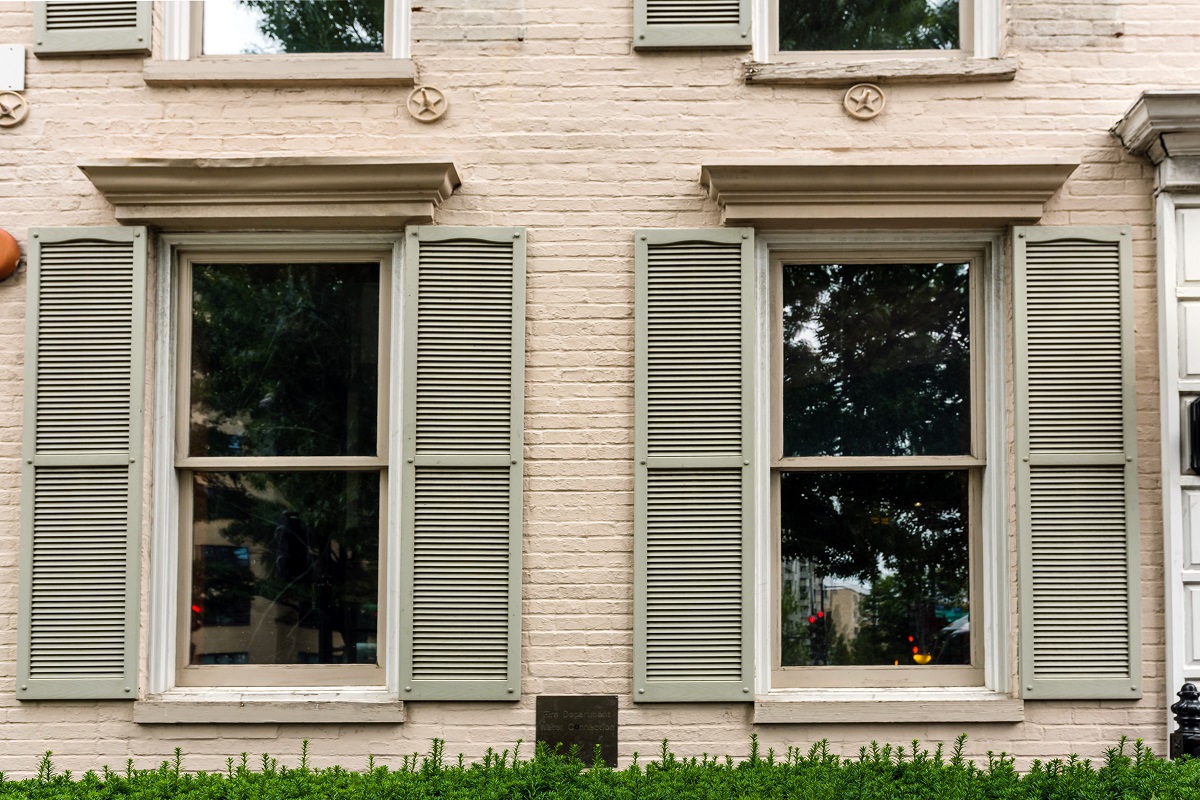
The replacement then has to match the original as closely as possible. The HDLC’s window guide lists size, shape, configuration, type, operation, materials, muntin pattern, dimensions, profiles and detailing, and requires clear or uniformly frosted glass unless you’re replacing historic colored or beveled glass in kind.
| Feature | What the HDLC looks for |
|---|---|
| Size and shape | Fits the existing opening, with no infill panels |
| Depth in the wall | Set back the same distance as the historic window |
| Configuration | The same light pattern, such as 6/6 or 4/1 |
| Type | The same operation, so no casement where a double-hung was |
| Proportions | Frame and muntin sizes that match the original |
| Trim | Decorative trim retained or replaced to match |
| Glass | Clear or uniformly frosted, without a pattern |
What the HDLC won’t permit
- Replacing a window if repair and maintenance would improve it and preserve historic elements
- Shrinking an opening with infill to fit a stock-size unit
- Switching window types, such as a casement in a former double-hung opening
- Enlarging or reshaping openings for picture or bay windows
- Replacing historic wood windows with vinyl or aluminum at street elevations
Materials: what’s likely to be approved
The HDLC recommends wood replacement sash, detailed to match other units on the building, when historic sashes are missing or can’t be repaired. It also approves true divided light windows to match historic configurations at street elevations.
Away from the street, there’s more room. The guidelines show recessed-mounted, simulated divided light windows with profiled exterior muntins and sash sizes that match traditional wood windows going to HDLC staff review at non-street-facing elevations. For vinyl and aluminum, the guidelines say dimensioned drawings with all details and finishes must be approved by HDLC staff before installation.
The HDLC discourages sash replacement kits and strongly discourages frame-and-sash replacement units, since both remove the historic sash. Its guidelines note that a frame-in-frame unit also reduces the size of the glass opening.
The guidelines also suggest architectural salvage as a source, noting that salvaged and repaired windows will often outlast new replacements because of the quality of wood historically used in New Orleans. Any salvaged window still has to match the size, shape, type, configuration and profiles of the historic ones.
What are the best replacement windows for a 100-year-old house
For a house in a regulated district, the best replacement is the one that matches: wood, true divided lights where the originals had them, the same operation and the same depth in the wall. The National Park Service says the search should start with the existing windows rather than a product catalog.
Its Preservation Brief 9 lists what to study first:
- The pattern of the openings and their size
- Proportions of the frame and sash
- Configuration of the window panes
- Muntin profiles
- Type of wood and paint color
- Characteristics of the glass
- Details such as arched tops and hoods
Outside the districts, you can choose from a wider range of materials, but the same list keeps a century-old facade intact. Double-hung windows are the most common type in New Orleans, according to the HDLC, and it notes that keeping the top sash operable helps let heat escape and promotes cross ventilation in this climate. Tall, arched or unusual openings usually call for made-to-measure units, which our custom windows page covers.
How much does it cost to replace historic windows
There’s no reliable single price, because historic work varies so much with size, condition and the matching the review requires. The HDLC’s guidelines list the costs to plan for instead:
- Labor to remove old windows, plus disposal
- Purchase and delivery of the new windows
- Labor and materials to modify existing framing
- Labor to install the new windows
- Life-cycle costs of replacing components and windows over time
Repair can change the math. The HDLC points out that a good carpenter can generally repair a historic wood window and add an interior storm window to improve thermal performance, and that a storm window can achieve R-values similar to a new thermal window. Get quotes for both repair and replacement before you decide.
Improving comfort without replacing
If your windows are repairable, the HDLC’s guidelines list several upgrades that don’t involve replacement. They’re worth trying first on a Significant or Contributing property.
- Install weatherstripping snugly between moving parts; the HDLC says quality metal weatherstripping can last 20 years.
- Re-caulk perimeter joints and replace missing or cracked glazing putty.
- Add sash locks to pull sashes tight.
- Add an interior storm window.
- Use operable exterior shutters, blinds or curtains to cut solar heat gain.
The National Park Service adds a caution on interior storms: moisture trapped between the layers can condense on the outer window, so the interior storm needs a tight seal while allowing some ventilation around the original window.
A safety note for older homes
If your house was built before 1978, the EPA’s Renovation, Repair and Painting rule applies. It requires anyone paid to disturb painted surfaces in homes built before 1978 to be certified and to use lead-safe work practices. Scraping, sanding or removing old sashes falls in that category, so hire a certified firm rather than stripping old windows yourself.
Frequently asked questions
How much does it cost to replace historic windows?
It depends on size, condition and how closely the replacement must match. The HDLC lists removal and disposal, the new windows, framing changes, installation labor and long-term component replacement as the costs to plan for, so get quotes for both repair and replacement.
What are the best replacement windows for a 100-year-old house?
Windows that match the originals in size, operation, pane pattern, muntin profile and depth in the wall. In an HDLC district, that usually means wood, and the HDLC doesn’t permit vinyl or aluminum in place of historic wood windows at street elevations.
Do I need approval to replace windows in a New Orleans historic district?
Yes. The HDLC requires a Certificate of Appropriateness and all necessary permits before work, and in the French Quarter, the Vieux Carré Commission must approve exterior work filed through the One Stop Shop.
How long does HDLC approval take?
The city says simple projects are approved at staff level in approximately 3 to 5 days. More complex work goes to the Architectural Review Committee or the full commission, which takes longer.
Plan your historic window project
A historic window project goes smoothest when the review, the measurements and the product choice line up from the start. Request a free estimate through our contact page or call (504) 226-6201, and we’ll look at your windows and talk through repair and window replacement options that fit your house and your district’s rules.
Related reading
- Why Replace Your Windows: The Top 5 Signs It’s Time for an Upgrade
- How Much Should I Budget for New Windows