Low-e glass has a microscopically thin, transparent metallic coating that reflects heat while letting light through. The Efficient Windows Collaborative says low-e coatings can reduce the energy loss associated with windows by as much as 40 percent, and in hot climates they’re tuned to keep solar heat from coming in. For a home under strong Louisiana sun, that coating does a lot of the work of keeping rooms comfortable.
It also protects what’s inside. The U.S. Department of Energy says low-e glass can protect household furnishings from UV-induced fading by as much as 75 percent. And since the coating is transparent, a good low-e window still looks like clear glass from inside the room.
At TurnKey Window, we can help you choose the glass package for new windows in a New Orleans area home. To talk about your own home, visit our contact page or call (504) 226-6201.
Key takeaways
- Low-e coatings are transparent metallic layers, thinner than a human hair, applied to the surface of the glass.
- They can reduce the energy loss associated with windows by as much as 40 percent, per the Efficient Windows Collaborative.
- Low-e glass can cut UV-induced fading of furnishings by as much as 75 percent, according to the Department of Energy.
- In a hot climate, look for a low solar heat gain coefficient; ENERGY STAR’s Southern zone requires 0.23 or lower.
- Visible transmittance on the NFRC label tells you how much daylight the glass lets through.
- Low-e is now a market standard, so ask what type of coating a quote includes rather than whether it has one.
How low-e glass works
Low-e stands for low emissivity. The Building America Solution Center describes the coating as a nearly invisible layer of silver applied to one or more surfaces of the glass panes, which reflects infrared radiation to keep heat out in summer and in during winter.
The Efficient Windows Collaborative explains that manufacturers tailor coatings to the climate. Coatings for cold climates are built to stop heat escaping, coatings for hot climates are built to stop heat entering, and moderate-climate coatings balance the two.
The same coating also blocks ultraviolet rays. The Building America Solution Center notes this helps prevent furniture fading, and the Department of Energy puts the protection from UV-induced fading at as much as 75 percent.
Why Louisiana sun makes low-e worth a close look
Louisiana’s energy code places every parish in Climate Zone 2A, the warm humid zone. A U.S. Department of Energy Building America case study of a New Orleans home says the intense solar radiation there imposes a large thermal load on the house that can increase cooling costs and affect comfort.
That’s exactly the load low-e glass is built to cut. The Efficient Windows Collaborative notes that in hot climates, improving frame insulation matters less than using a higher-performance glazing system, because solar gain typically outweighs heat conducted through the window.
The New Orleans case-study house itself used double-pane windows with spectrally selective low-e glass, rated at a U-factor of 0.37 and an SHGC of 0.33. Today’s ENERGY STAR Southern zone criteria are tighter, at 0.32 and 0.23.
The ratings that tell you how a low-e window performs
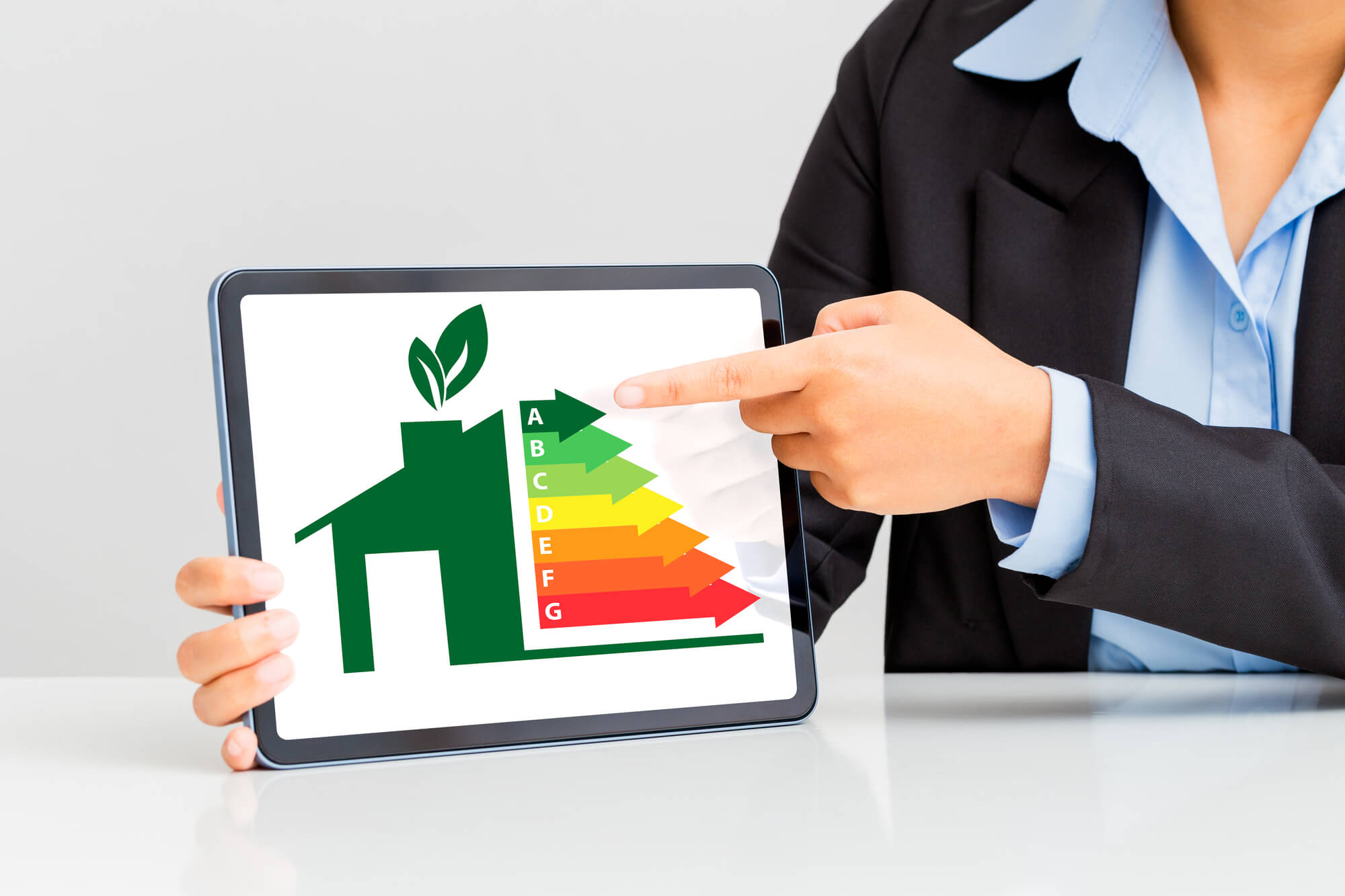
You can’t see a coating’s performance, but the NFRC label spells it out. These are the numbers to compare on every quote.
| Rating | What it measures | What to look for in Louisiana |
|---|---|---|
| Solar heat gain coefficient (SHGC) | How much of the sun’s heat comes through, from 0 to 1 | Low; ENERGY STAR’s Southern zone requires 0.23 or lower |
| U-factor | How well the window insulates | Low; the Southern zone requires 0.32 or lower |
| Visible transmittance (VT) | How much light gets through, from 0 to 1 | Higher for brighter rooms; ENERGY STAR says typically 0.20 to 0.80 |
| Condensation resistance | Ability to resist moisture on the interior, 1 to 100 | Higher is better |
The Efficient Windows Collaborative says that in hot climates, windows with a low SHGC can reduce cooling costs and prevent overheated rooms from the afternoon sun. That’s the single most important number for a sun-facing wall on the Gulf Coast.
Match the glass to each side of the house
The Department of Energy’s consumer guide to efficient windows suggests choosing glass by orientation. For warmer climates, its guidance runs like this:
- South-facing: low SHGC, plenty of shade and a low U-factor
- East-facing: low SHGC and a low U-factor
- West-facing: low SHGC and a low U-factor
- North-facing: a low U-factor
The Building America Solution Center also recommends limiting the number of west-facing windows, especially in hot climates, to cut afternoon glare and solar heat gain. If you’re replacing rather than building, that means putting your best low-SHGC glass on the west wall.
Shade counts too. The DOE guide pairs low-SHGC glass with lots of shade on south-facing windows in warmer climates, so deep porches, awnings and mature trees all help the coating do its job.
Is low-e glass still clear
Yes. The Efficient Windows Collaborative describes low-e coatings as transparent metallic layers, and the Building America Solution Center calls the silver layer nearly invisible. From inside, a low-e window reads as clear glass.
Coatings do differ in how much light they let through, and that’s what visible transmittance measures. The Efficient Windows Collaborative notes that low-e coatings let different amounts of light and heat pass through, so if you want bright rooms, compare VT alongside SHGC before you choose.
- Ask to see a sample of the glass in daylight before you order.
- Compare the VT numbers on the NFRC labels, where higher means more light.
- Keep the same coating on every window on one side of the house so the facade looks uniform.

Is low-e glass worth the cost
For a hot, sunny home, the case is strong. The Department of Energy says upgrading to ENERGY STAR qualified windows can save as much as 7 to 15 percent or more on annual household energy bills, depending on location and the windows being replaced. ENERGY STAR puts average savings at up to 13 percent nationwide when replacing single-pane windows.
The added benefits are easy to overlook. Low-e glass protects floors, rugs and furniture from UV fading, and the Efficient Windows Collaborative notes it reduces discomfort near the glass. The same DOE guide says homeowners recoup about 78 percent of the cost of new windows on average when the home is sold.
The Efficient Windows Collaborative also calls low-e technology a market standard. In practice, that means the real choice is usually which low-e coating to get, and in Louisiana the answer is one with a low SHGC.
Low-e works best as part of a complete window
The coating is one feature among several. The Department of Energy’s consumer guide lists what ENERGY STAR qualified windows combine: double or even triple panes with inert gases such as argon between them, frame materials designed to insulate, spacers that keep the panes the correct distance apart, and low-e coatings.
- Gas fills. The Efficient Windows Collaborative says argon and krypton are denser than air, and in warm climates they help keep outside heat from coming in.
- Spacers. The DOE guide says spacers reduce heat flow and help prevent condensation.
- Frames. Federal energy guidance favors nonthermally conductive frames such as wood, vinyl or fiberglass, and says mostly metal frames need carefully integrated thermal breaks.
Gas fills hold up well over time. The collaborative puts the leakage rate for an efficient window at about 0.5 percent of the gas fill per year, and says that after two decades such a window would still perform at 90 percent of its original capacity.
Seal the house first
The DOE guide gives one piece of advice many buyers skip: before replacing windows, make sure your home is already properly insulated and air sealed. New low-e glass works best in a house that isn’t leaking cooled air elsewhere.
Read the ENERGY STAR label
The same guide notes the ENERGY STAR label shows the climate zones where a window will perform best. For a Louisiana home, check that the Southern zone is marked.
How to choose low-e glass, step by step
- Confirm your zone. Louisiana falls in ENERGY STAR’s Southern zone.
- Set your SHGC target. Look for 0.23 or lower, the Southern zone requirement.
- Check U-factor. Aim for 0.32 or lower.
- Balance daylight. Compare VT so rooms don’t end up dimmer than you want.
- Prioritize the west and south walls. Put your lowest-SHGC glass where the sun hits hardest.
- Look for the labels. ENERGY STAR says its label sits next to the NFRC label on the glass.
- Insist on proper installation. The DOE guide warns that even the most energy-efficient windows can result in a drafty house and condensation if they’re not properly installed.
Frequently asked questions
Is Low-E glass worth the cost?
In a hot climate, usually yes. The Department of Energy says ENERGY STAR qualified windows can save 7 to 15 percent or more on annual energy bills, and low-e glass also cuts UV-induced fading of furnishings by as much as 75 percent.
Is Low-E glass still clear?
Yes. Low-e coatings are transparent metallic layers that the Building America Solution Center describes as nearly invisible, though coatings vary in how much light they pass, which the VT rating on the NFRC label shows.
What SHGC should low-e windows have in Louisiana?
ENERGY STAR’s Southern zone, which covers Louisiana, calls for an SHGC of 0.23 or lower along with a U-factor of 0.32 or lower, according to the Building America Solution Center.
Does low-e glass block UV rays?
Yes. The Department of Energy says low-e glass reflects ultraviolet light and can protect household furnishings from UV-induced fading by as much as 75 percent.
Does low-e glass make rooms darker?
It can a little, depending on the coating. Low-e coatings let different amounts of light through, so compare the visible transmittance on the NFRC label, where a higher number means more daylight in the room.
Get the right glass for your sun
The right low-e coating depends on which way your windows face and how much light you want inside. Request a free estimate on our contact page or call (504) 226-6201, and we’ll recommend glass for each wall as part of our window replacement service. For a broader look at efficient features, see our guide to the best energy-efficient windows for homes.
Related reading
Sources
- Efficient Windows Collaborative: Low-e coatings
- Efficient Windows Collaborative: Window ratings
- Efficient Windows Collaborative: Gas fills
- Efficient Windows Collaborative: Metal frame types
- U.S. Department of Energy: Consumer guide to energy-efficient windows
- U.S. Department of Energy FEMP: Purchasing energy-efficient residential windows
- Building America Solution Center: High-performance ENERGY STAR windows
- ENERGY STAR: Residential windows, doors and skylights
- ENERGY STAR: Independently tested and certified energy performance
- Louisiana Energy Code 2021, Chapter 3 general requirements
- U.S. Department of Energy Building America: New Orleans Green Dream I case study