
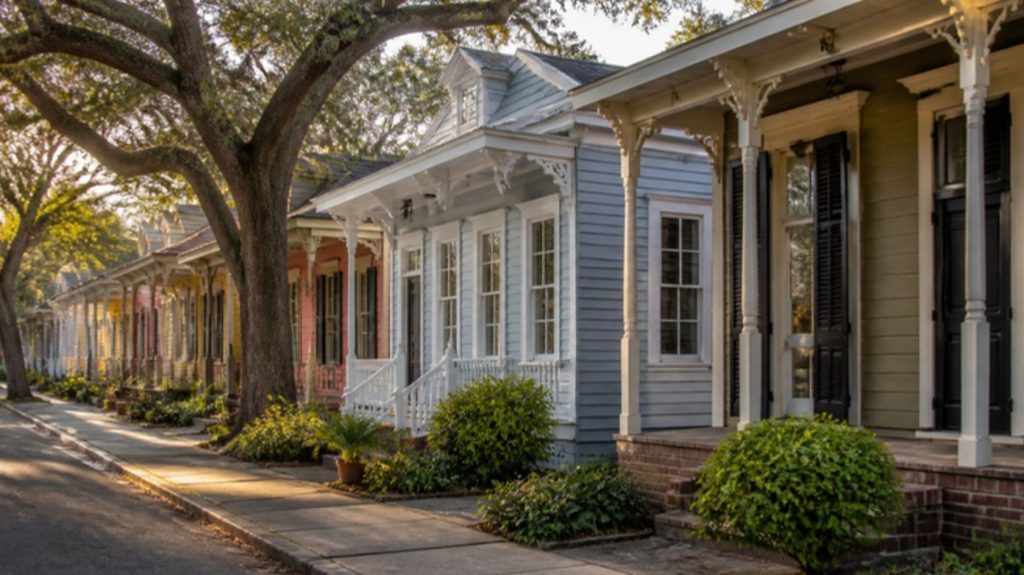
If you’re replacing windows inside the City of New Orleans, plan on a building permit. The city’s building code requires a permit for anyone who wants to alter or repair a building, and window replacement isn’t on the city’s short list of work that’s exempt. If your house sits in a local historic district, you’ll also need a Certificate of Appropriateness before that permit is issued.
None of this has to slow your project much. Simple permits are often handled quickly, and historic review for routine work usually takes days, not months. This guide walks through what the city asks for, what it costs, and where the historic commissions come in.
At TurnKey Window we install and replace windows across the New Orleans area, and permits are one of the first questions homeowners ask. If you’d like to talk through your own house, send us a message or call (504) 226-6201.
Key takeaways
- The City of New Orleans requires a building permit for work that alters or repairs a building, and window replacement is not on its exemption list.
- Building permits can be applied for online through the city’s One Stop App.
- The city’s building permit fee formula is job value x .005 + $60, with a 50 percent surcharge for properties in a local historic district.
- Exterior work on any building in a local historic district needs a Certificate of Appropriateness from the Historic District Landmarks Commission (HDLC), and the French Quarter falls under the Vieux Carré Commission.
- The HDLC does not permit replacing historic wood windows with vinyl or aluminum at street elevations.
- For home improvement jobs over $7,500, Louisiana requires the contractor to hold a home improvement registration or a higher state license.
Do you need a permit to replace windows in New Orleans?
The short answer is yes, in most cases. The city’s Guide to Building Permits quotes the building code: any owner, agent or contractor who wants to construct, enlarge, alter, repair, move or demolish a building must first get a permit.
The same guide lists work that’s generally exempt, such as interior painting, exterior painting without scaffolding, small uncovered decks and fences up to 7 feet. Window replacement isn’t on that list. When you’re unsure, the city points you to the Building Division at (504) 658-7130.
A quick note on geography. This article covers the City of New Orleans, which is Orleans Parish. If you live in Metairie, Kenner, Slidell or another parish, your permit office is different, so check with that parish before you schedule work.
Replacement, repair and the gray areas
Swapping a window unit is an alteration to the building, so it falls under the permit rule. Smaller jobs like replacing a cracked pane, fixing a balance or re-screening a sash are closer to maintenance, but the city doesn’t publish a line between them on its exemption list.
That’s why a two-minute call to the Building Division is worth making before a repair-only job. If you’re in a historic district, call the HDLC too, since exterior changes there are reviewed even when the building permit question is simple.
If you’re still deciding between fixing and replacing, our window repair and window replacement pages explain what each service covers.
How the permit process works in New Orleans
The city’s guide says all building permits can be applied for online through the One Stop App. Homeowners can apply there, and so can contractors on your behalf.
Here’s the usual order of events for a window job, based on the city’s own guidance.
- Confirm your district. Find out whether your property is in a local historic district or is a designated landmark. The HDLC can tell you your property’s rating by phone.
- Get historic approval first, if it applies. A Certificate of Appropriateness is part of the building permit file for properties in a local historic district.
- Gather the application details. Address, the market value of the work, owner and contractor information and a clear description of the windows being replaced.
- Apply and pay. Submit through the One Stop App and pay the permit fee, which is based on job value.
- Post the permit. The city’s permit brochure says the permit must be posted where it can be seen from the street.
- Schedule inspections. The city notes that its permit fees include normal inspections and the Certificate of Use and Occupancy.
What to have ready for the application
The city’s Guidelines for Building Permits brochure lists the information it needs to process a building permit. For a window project, these are the items that usually matter:
- The municipal address of the property
- The market value of the work, even if you’re doing it yourself
- The owner’s name, address and phone number
- The contractor’s name, address and phone number, plus a copy of the contractor’s current certificate of registration and license number
- A detailed description of the work, such as the number of windows, their locations and the type of unit going in
- A Certificate of Appropriateness if the property is in a local historic district or is a landmark
The same brochure notes that clear, straightforward work can often be reviewed by a permit analyst and issued the same day. Jobs that need drawings, such as structural changes to an opening, go through plan review first.
What a window permit costs
New Orleans bases building permit fees on the value of the work. The city’s guide gives the formula as job value x .005 + $60. In plain numbers, that’s $60 plus $5 for every $1,000 of work.
If your property sits in a local historic district, the HDLC’s Certificate of Appropriateness page explains that the commission doesn’t collect its own fee, but a 50 percent surcharge is added to the permit fee.
| Job value | Permit fee (value x .005 + $60) | With 50% historic surcharge |
|---|---|---|
| $8,000 | $100 | $150 |
| $15,000 | $135 | $202.50 |
| $25,000 | $185 | $277.50 |
| $40,000 | $260 | $390 |
These figures come straight from the city’s published formula. The final number on your permit can differ if plan review or other surcharges apply, so treat the table as a planning estimate and check the city’s fee tools before you budget.
One more cost to avoid: the city’s brochure warns that starting work before you have a permit brings penalty fees of two times the permit price on top of the regular fee. Its advice is blunt, and it’s good advice. Don’t begin work before the permit is issued.
Historic districts: the HDLC and the Vieux Carré Commission
If your home is in a local historic district, this is where a window project needs the most planning. The HDLC’s page says a Certificate of Appropriateness is required for exterior work on all buildings in local historic districts and on designated landmarks.
The French Quarter has its own body. The Vieux Carré Commission’s design guidelines cover all exterior changes to properties within the Vieux Carré Historic District, so Quarter homeowners start there instead of with the HDLC.
How long historic review takes
According to the HDLC, review and approval of a Certificate of Appropriateness currently takes about 3 to 5 days. Staff can approve routine work directly.
Bigger items, like demolition, new construction or work already done without approval, usually go to the full commission after an Architectural Review Committee meeting. That path takes longer, which is one more reason to get approval before the old windows come out.
What the HDLC looks for in replacement windows
The HDLC’s Guidelines for Windows and Doors explain that the commission reviews all alterations to and replacement of visible exterior windows and doors. What’s allowed depends on your property’s rating: Significant, Contributing or Non-Contributing.
The guidelines are specific. Among the points that shape most window projects:
- The HDLC strongly encourages exploring repair and selective part replacement before replacing whole sashes or frames.
- It requires replacement windows to match the original size, shape, configuration, type, operation, materials, muntin pattern and detailing as closely as possible.
- It does not permit replacing historic wood windows with vinyl or aluminum windows at street elevations.
- It does not permit shrinking an opening with in-fill so a stock size will fit.
- It does not permit switching to an inappropriate type, such as a casement in a former double-hung opening.
- It requires clear or uniformly frosted glass without a pattern, unless historic colored or beveled glass is being replaced in kind.
The guidelines also recommend putting replacement windows in less visible areas and using quality wood replacement units. If your home has original wood windows facing the street, expect the conversation to start with repair.
Custom sizing often comes up here, because historic openings rarely match stock dimensions. Our custom windows page covers how made-to-measure units fit older openings without in-fill.
Who pulls the permit, you or your contractor
The city lets homeowners apply through the One Stop App, and a contractor can apply on your behalf. In practice, the person doing the work usually handles it, since the application asks for contractor details and a copy of the contractor’s registration.
Louisiana adds its own layer. The Louisiana State Licensing Board for Contractors FAQ says a home improvement registration is required when a residential project’s total amount is over $7,500, with labor and materials counted together. Larger jobs can fall under other license classifications, so check the board’s site for your project size.
The same board runs a public contractor search where you can look up a contractor by name, license number, parish or type. It takes a minute and it’s worth doing before you sign anything.
Questions to settle with your installer before work starts
- Who is applying for the permit, and whose name will be on it
- Whether the price you were quoted includes the permit fee and any historic surcharge
- Whether your property needs HDLC or VCC approval, and who is preparing that application
- What happens to the schedule if historic review asks for changes to the window type or material
- How the final inspection will be scheduled and who needs to be home for it
Codes your new windows have to meet
A permit is how the city confirms the work meets code. Louisiana’s statewide residential code is based on the 2021 International Residential Code, adopted with amendments and effective January 1, 2023, as summarized by the ICC NTA’s Louisiana code update.
The HDLC’s guidelines note that when significant changes are made to existing buildings, the building and residential codes require hurricane protection for windows. They also point out that hurricane-rated windows don’t guarantee glass won’t break in a storm, and that their wide frames often don’t suit historic proportions.
That tension between storm protection and historic character is common in older neighborhoods. If you’re weighing impact glass, our impact-resistant windows page is a good place to compare options, and the HDLC can tell you what it will approve on your street.
A simple timeline for a permitted window project
Every house is different, but most permitted window jobs in the city follow a similar rhythm. Here’s how the pieces fit together.
- Measure and quote. Your installer measures openings and confirms window types, which gives you the job value the permit is based on.
- Historic review, if needed. The HDLC says routine approvals currently take about 3 to 5 days.
- Permit issued. Straightforward permits can often be issued the same day, according to the city’s brochure.
- Order and install. Windows are ordered once specs are approved, then installed.
- Inspection and closeout. The inspector checks the work, and the permit is closed.
The biggest delays usually come from changing the plan midstream, such as switching materials after the Certificate of Appropriateness is issued. Settle the window style and material before you apply and the rest tends to move on schedule. Our window installation page explains what happens on the day the new units go in.
Frequently asked questions
Do I need a permit to replace windows in New Orleans?
In most cases, yes. The city’s building code requires a permit to alter or repair a building, and window replacement isn’t on the city’s list of exempt work, so call the Building Division at (504) 658-7130 if your job is borderline.
How much does a window permit cost in New Orleans?
The city’s formula is job value x .005 + $60, so a $15,000 window job works out to about $135. Properties in a local historic district add a 50 percent surcharge to that permit fee.
Do I need HDLC approval to replace windows in a historic district?
Yes. The HDLC requires a Certificate of Appropriateness for exterior work on buildings in local historic districts, and it reviews all replacement of visible exterior windows, with routine approvals currently taking about 3 to 5 days.
Can I put vinyl windows in a historic New Orleans home?
The HDLC’s guidelines say it does not permit replacing historic wood windows with vinyl or aluminum at street elevations. It recommends placing replacement windows in less visible areas and using quality wood units where historic sashes can’t be repaired.
Can a homeowner pull their own window permit?
The city lets homeowners apply online through the One Stop App. The application still asks for contractor details when a contractor does the work, and Louisiana requires contractors on residential jobs over $7,500 to hold a home improvement registration or a higher state license.
Plan your window project with a local team
Permits and historic review are easier when the window plan is settled early. If you’d like help choosing replacement windows that fit your home and your district, we’re happy to measure and talk it through.
Visit our window replacement page, read our FAQs, or request a free estimate. You can also call us at (504) 226-6201.
Related reading
Sources
- City of New Orleans, Guide to Building Permits
- City of New Orleans Department of Safety and Permits, Guidelines for Building Permits (brochure)
- City of New Orleans, One Stop App
- City of New Orleans, Certificate of Appropriateness (HDLC)
- New Orleans HDLC, Guidelines for Windows and Doors
- Vieux Carré Commission, Design Guidelines
- Louisiana State Licensing Board for Contractors, FAQ
- ICC NTA, Louisiana Code Adoption Effective January 1, 2023