
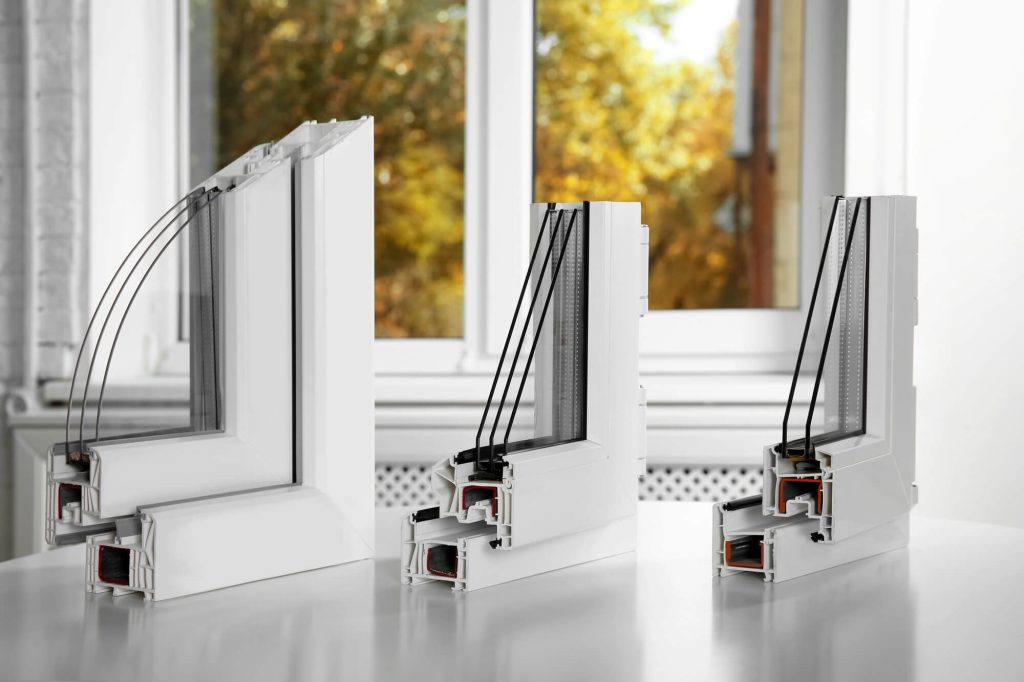
Laminated glass is two or more panes bonded together with a plastic interlayer, so when the glass breaks, the pieces stick to that layer instead of falling out. That one trait is why it shows up in hurricane windows, skylights and anywhere broken glass would be a problem.
On the Gulf Coast it earns its keep in three ways: it helps keep an opening closed when debris hits, it blocks most of the sun’s UV, and it cuts outside noise. It also costs more and needs a careful install, which we’ll cover below.
If you’re thinking about laminated glass for your home, TurnKey Window can help you compare options window by window. Request a free estimate or call (504) 226-6201.
Key takeaways
- Laminated glass bonds glass panes to a polymer interlayer using heat and pressure, and the fragments stay attached when it breaks.
- It’s the glass at the heart of most impact windows, but laminated glass alone doesn’t make a window impact rated. The whole unit has to pass testing.
- Guardian Glass says laminated glass can absorb up to 99 percent of damaging UV rays.
- HomeGuide puts laminated glass replacement at $300 to $750, compared with $200 to $500 for standard float glass.
- Its weak spot is the edge: moisture that sits against it can cause a whitish haze or delamination over time.
What laminated window glass is
Guardian Glass defines laminated glass as two or more lites of glass permanently bonded together with one or more polymer interlayers using heat and pressure. The glass and interlayer come in a range of colors and thicknesses to meet code and performance needs.
Guardian’s pages refer to PVB interlayers, which you’ll also see on window spec sheets. Its own naming example describes a common make-up as two 1/8 inch panes of float glass with a 0.060 inch interlayer between them.
Guardian notes that laminated glass is considered “safety glass” when it meets the requirements of the code organizations that set safety standards. Under enough force it will break, but the fragments tend to adhere to the interlayer and stay largely intact.
How it compares with other window glass
The Building America Solution Center describes the four glass types you’ll hear about when shopping for windows:
| Glass type | How it’s made | How it breaks |
|---|---|---|
| Annealed | Standard glass most windows are made of | Into large shards |
| Tempered | Heated, then cooled rapidly; up to five times stronger than traditional glass | Into small pebble-sized bits without sharp edges |
| Laminated | Two or more panes bonded with a film or vinyl layer | Cracks, but pieces stay held to the interlayer |
| Impact resistant | May combine tempered and laminated glass in a heavy-duty frame | Designed to keep the opening closed after impact |
The difference between tempered and laminated is the one people mix up most. Tempered glass is stronger, but once it breaks, the opening is open. Laminated glass may crack, but the sheet stays in the frame.
What laminated glass does for a Gulf Coast home
Storm protection
Guardian says that in hurricane-resistant applications, laminated glass can help prevent water and air from entering the building. The Building America Solution Center explains why that matters: wind that gets in through a broken window can pressurize a house and blow out other windows, doors or walls.
Some impact windows use an outer pane of standard glass and an inner laminated pane. According to the Solution Center, the outer pane may break on impact while the inner pane cracks into small pieces that stay stuck to the vinyl layer.
Guardian adds that heat-strengthened or tempered glass can be built into a laminated unit to further strengthen its impact resistance. You can read more about how full impact units are built on our impact resistant windows page.
Laminated is not automatically impact rated
This is the point to hold onto when you’re comparing quotes. The Solution Center says impact-resistant products must be rated and labeled under ASTM E1996 and ASTM E1886, or AAMA 506.
Those tests rate the whole assembly, including the frame and how the glass is held in it. A window with laminated glass that hasn’t passed them may be safer than plain glass, but you shouldn’t count on it as storm protection.
UV and fading
Guardian says laminated glass can absorb up to 99 percent of damaging UV rays, which it notes can be responsible for up to 50 percent of fading. In a sunny climate, that protection helps floors, rugs and furniture near south and west windows keep their color longer.
Noise
According to Guardian’s acoustic glass guide, laminated glass improves sound insulation by decoupling the glass panes and damping the vibrations sound waves create. Replacing a single pane with a laminated pane of the same overall thickness significantly improves sound insulation.
Guardian also notes that special acoustic PVB interlayers, built with a soft acoustic core, are available for even better sound control. For exterior windows, it says laminated glass tends to produce higher Outdoor-Indoor Transmission Class ratings, the measure used for sound coming through outside walls.
Energy performance still comes from the rest of the glass package
Laminated glass handles breakage, UV and noise, but the summer heat load is a separate job. This Old House n