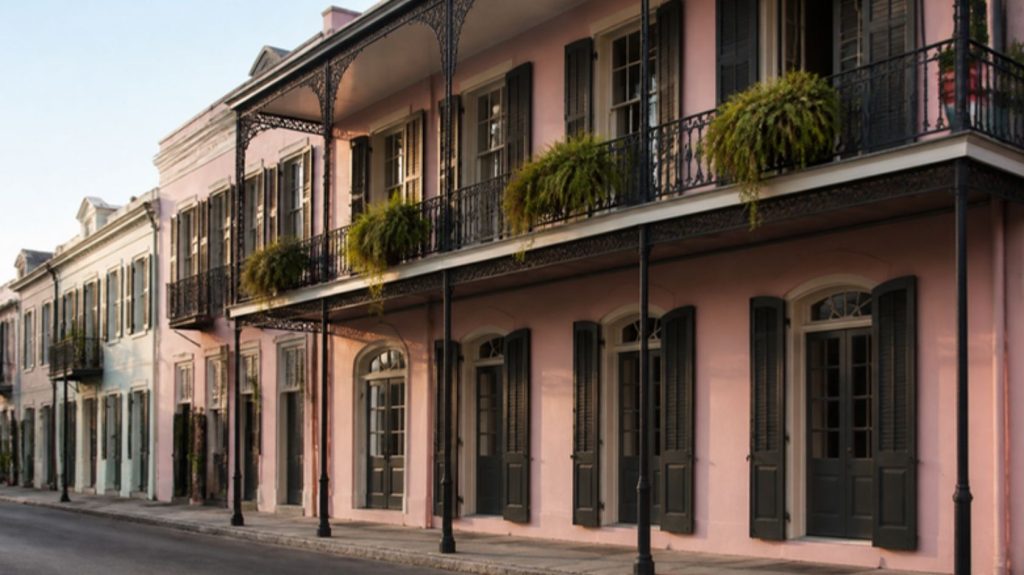
Replacing windows in a historic New Orleans home starts with one question: is the house inside a local historic district or a landmark. If it is, the Historic District Landmarks Commission, or the Vieux Carré Commission in the French Quarter, reviews visible exterior window changes before any work begins. The HDLC strongly encourages repair over replacement, and it doesn’t permit replacing historic wood windows with vinyl or aluminum at street elevations.
That doesn’t mean you’re stuck with drafty, stuck sashes. It means the path runs through documentation, careful matching and, often, repair of what’s already there. Outside regulated districts, you have more freedom, but the same matching principles still keep an old house looking right.
This guide explains what to expect, step by step. For help with your own windows, TurnKey Window works with homeowners across the New Orleans area, and you can reach us through the contact page or at (504) 226-6201.
Key takeaways
- In a local historic district or at a landmark, you need a Certificate of Appropriateness and permits before exterior window work.
- The HDLC says staff-level approvals for simple projects take approximately 3 to 5 days.
- To replace historic windows, the HDLC requires documentation showing the existing windows are beyond repair.
- Replacements must match the original size, shape, configuration, materials, muntin pattern and detailing as closely as possible.
- The HDLC doesn’t permit vinyl or aluminum replacements for historic wood windows on street elevations.
- In homes built before 1978, paid work that disturbs paint must follow EPA lead-safe rules.
Step one: find out which rules apply to your house
New Orleans has two bodies that review exterior changes to historic buildings. Which one applies depends on where your house sits.
- Vieux Carré Commission. Its jurisdiction covers private and semi-private properties within the Vieux Carré Historic District. The city says an application must be filed through the One Stop Shop and VCC approval obtained before any exterior work begins.
- Historic District Landmarks Commission. The HDLC reviews all alterations to and replacement of visible exterior windows and doors in its local historic districts and at landmarks.
- Everywhere else. Outside those districts and landmarks, these commissions don’t review your windows, but check with the city’s One Stop Shop about any other permits your project needs.
The HDLC also rates each property as Significant, Contributing or Non-Contributing, and the rating determines what’s permitted. Its window guidelines invite owners to call the HDLC at (504) 658-7040 to confirm whether a project needs review or to get a property rating.
Why the city pushes repair first
The HDLC’s guidelines for windows and doors say windows and doors make up at least a quarter of the exterior wall surface of most historic buildings, and that they help define a building’s style and age. Given that, the HDLC strongly encourages repairing existing windows and replacing only deteriorated components.
The guidelines also make a practical point. Replacing an entire wood window because of a deteriorated sill or bottom rail is rarely necessary, and a window that hasn’t been maintained can look significantly worse than its actual condition.
The National Park Service agrees. Its Preservation Brief 9 recommends keeping and repairing original windows whenever possible, and says wooden windows that are repaired and properly maintained will have greatly extended service lives.
The HDLC’s repair ladder
- Routine maintenance. Replace broken or missing trim, glazing or sash cords, check caulk, glazing putty and weatherstripping, and repaint.
- Treat or repair. At early stages of decay, treat wood for insects or fungus, consolidate with epoxy, fill holes and cracks, and paint.
- Replace components. Swap in a matching piece of wood, called a Dutchman, or replace the whole component if most of it is gone.
- Replace the window. If most components are deteriorated, damaged or missing, a new window that matches the original might be warranted.
When replacement is allowed, what it has to match
If repair isn’t realistic, the HDLC requires documentation of the existing windows’ deterioration that’s sufficient to justify replacement, plus detailed, dimensioned documentation of both the existing and proposed windows.
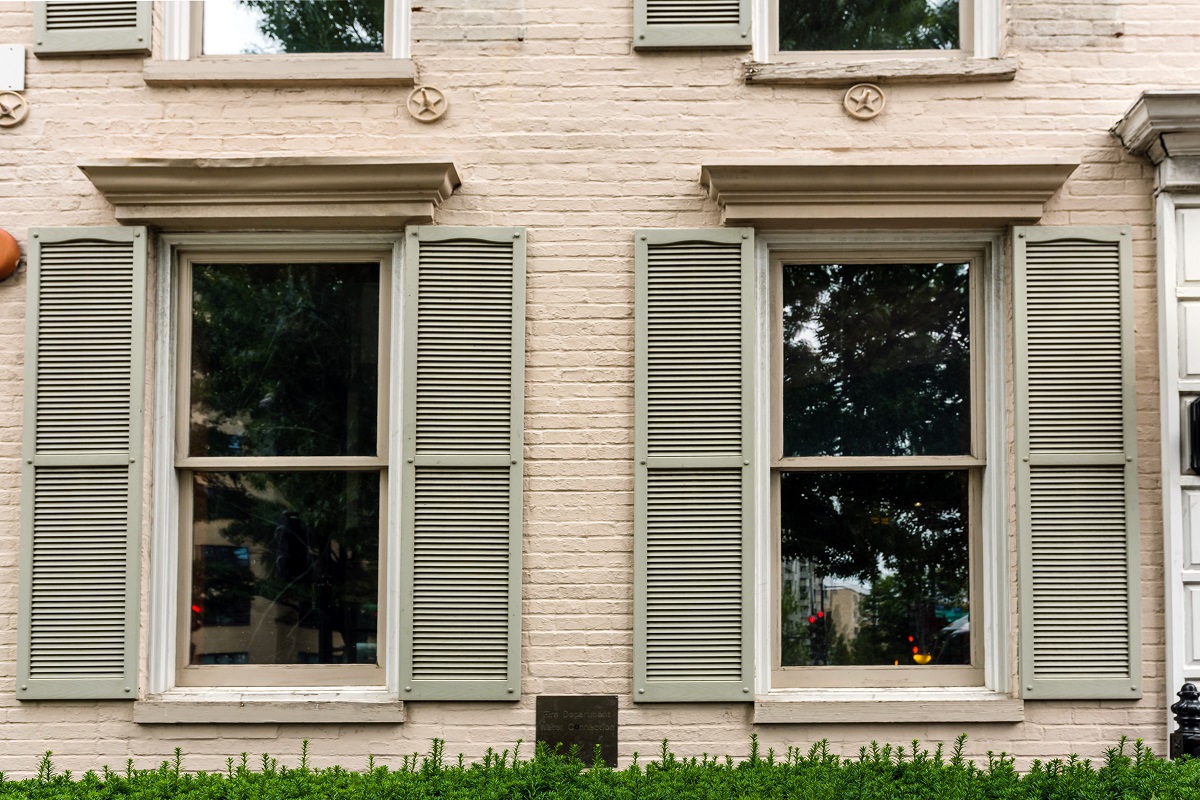
The replacement then has to match the original as closely as possible. The HDLC’s window guide lists size, shape, configuration, type, operation, materials, muntin pattern, dimensions, profiles and detailing, and requires clear or uniformly frosted glass unless you’re replacing historic colored or beveled glass in kind.
| Feature | What the HDLC looks for |
|---|---|
| Size and shape | Fits the existing opening, with no infill panels |
| Depth in the wall | Set back the same distance as the historic window |
| Configuration | The same light pattern, such as 6/6 or 4/1 |
| Type | The same operation, so no casement where a double-hung was |
| Proportions | Frame and muntin sizes that match the original |
| Trim | Decorative trim retained or replaced to match |
| Glass | Clear or uniformly frosted, without a pattern |
What the HDLC won’t permit
- Replacing a window if repair and maintenance would improve it and preserve historic elements
- Shrinking an opening with infill to